UV-Resistant Aluminium Labels for Australian Solar Farms
18 June 2026 · solar farm · asset labelling · aluminium labels
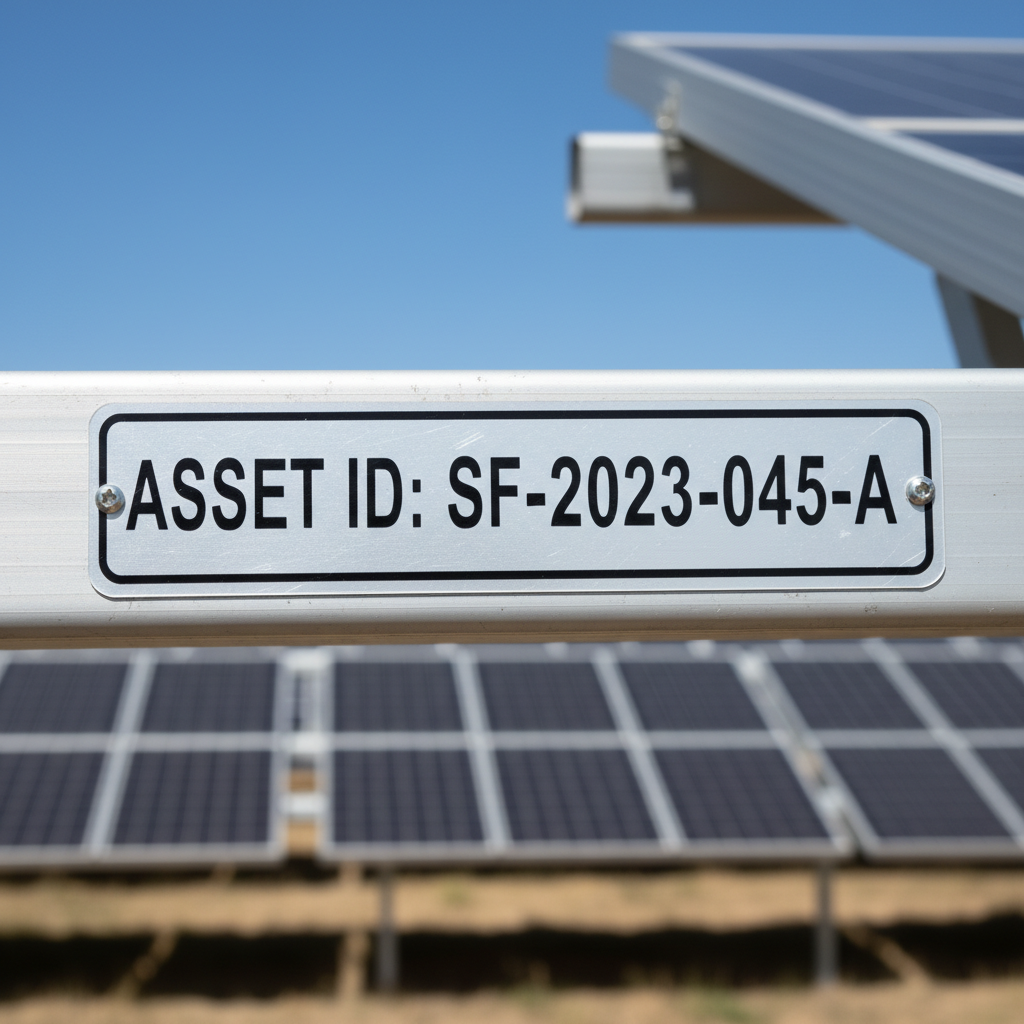
Australia's sun is notorious, and nowhere is its intensity more relentlessly felt than on an open-air solar farm. These critical energy generation sites are vast networks of interconnected assets – panels, inverters, cables, and infrastructure – all requiring clear, durable identification. For Australian operations, facilities, and asset managers, choosing the right labelling material isn't just about aesthetics; it's about safeguarding investments, ensuring compliance, and maintaining operational efficiency for decades.
Ignoring the unique challenges of our harsh climate, particularly the pervasive UV radiation, can lead to swift label degradation, unidentifiable assets, and significant operational headaches. This article will explain why UV-resistant aluminium labels are not just a good choice but an essential one for the longevity and reliability of your solar farm assets.
The Australian Sun: A Challenge for Asset Identification
Our climate presents a unique set of challenges that standard labels simply can't withstand. High ambient temperatures, corrosive coastal air, and ubiquitous dust are all significant factors. However, it's the sun's ultraviolet (UV) radiation that poses the most significant threat to label longevity.
UV radiation accelerates the breakdown of many materials, including plastics, inks, and adhesives commonly used in conventional labels. This degradation manifests as fading, cracking, peeling, and eventually, complete obliteration of critical information. On a solar farm, where identification is paramount for maintenance, safety, and compliance, this rapid deterioration is unacceptable.
Why Standard Labels Fail in Solar Farm Environments
Many commercially available labels, designed for indoor or less extreme outdoor use, simply aren't engineered for the conditions found on an Australian solar farm. Here's why they often fall short:
- Fading Inks: Most standard inks, especially those used in digital printing on plastic or vinyl, are highly susceptible to UV degradation. What starts as a crisp asset ID can become an illegible blur within a matter of months or even weeks under direct Australian sunlight.
- Material Embrittlement: Plastics and vinyl, while flexible initially, can become brittle and crack under prolonged UV exposure and temperature fluctuations. This leads to labels peeling, flaking, or breaking off entirely, leaving assets unmarked.
- Adhesive Failure: The adhesives on self-adhesive labels are also vulnerable to heat and UV radiation. They can dry out, lose their tack, or become gooey and ineffective, causing labels to detach from the asset.
- Abrasion and Chemical Resistance: Beyond UV, solar farm assets are regularly cleaned, exposed to dust storms, and may encounter various chemicals (e.g., from cleaning solutions or incidental spills). Many standard labels lack the necessary resistance to these factors, leading to physical damage and text removal.
The cost of these failures extends beyond just replacing labels. It includes lost time searching for unidentifiable assets, potential safety risks from unlabelled electrical components, and compliance issues if critical information isn't readable during an audit.
The Unmatched Durability of UV-Resistant Aluminium Labels
Aluminium labels, specifically those processed with robust UV-resistant treatments, are engineered to overcome these challenges. Their inherent properties make them ideally suited for the demands of solar farm applications.
Firstly, aluminium itself is incredibly stable and resistant to environmental degradation. Unlike plastics, it won't embrittle or crack under UV exposure. Secondly, the key to their UV resistance lies in how the information is applied and protected. Methods like anodic printing or deep laser engraving embed the data into the metal or protect it under a tough, UV-stable anodic layer. This encapsulation or embedding prevents the critical text and barcodes from fading, even after years of direct sun exposure.
Furthermore, aluminium's excellent thermal conductivity means it can handle the intense heat of solar farms without warping or delaminating. It's also inherently resistant to corrosion, particularly when anodised, making it suitable for coastal solar farms where salt spray is a factor. These combined attributes ensure that an aluminium label remains legible, attached, and intact for the entire lifecycle of the asset it identifies.
Key Benefits for Solar Farm Asset Management
Implementing UV-resistant aluminium labels brings a host of tangible benefits for Australian solar farm operators:
- Long-Term Asset Identification: The primary benefit is enduring legibility. Labels remain clear and readable for decades, matching the expected lifespan of solar panels and inverters. This simplifies maintenance schedules, fault finding, and replacement processes.
- Enhanced Safety: Clearly marked electrical components, emergency shut-offs, and critical pathways greatly improve workplace safety for technicians and visitors. Aluminium labels ensure these warnings remain prominent and understandable.
- Compliance and Auditing: Regulatory bodies and certification standards often require durable, legible labelling for all major assets. Aluminium labels help ensure your farm meets these requirements, simplifying audits and avoiding potential penalties.
- Reduced Operational Costs: By eliminating the need for frequent label replacement and reducing the time spent identifying assets, these labels contribute to significant operational savings over the farm's lifespan.
- Improved Data Accuracy: When asset IDs are always clear, inventory management and data collection become more accurate, leading to better decision-making regarding asset performance and maintenance.
- Harsh Environment Resistance: Beyond UV, these labels are highly resistant to abrasion, chemicals, extreme temperatures, and general wear and tear, ensuring their integrity in Australia's varied and often challenging environments.
Choosing the Right Aluminium Label for Your Solar Farm
Not all aluminium labels are created equal. When selecting a supplier, consider the following:
- Application Method: Will the labels be riveted, screwed, or adhered? Ensure the label design accommodates your preferred attachment method. Often, a combination of mechanical fastening and a high-bond adhesive is ideal for security.
- Printing/Engraving Method: Anodising with embedded print or deep laser engraving offers superior UV resistance compared to surface-printed options, which can still fade. Discuss these options with your supplier to understand which provides the maximum durability.
- Customisation Options: Your solar farm likely requires specific data, barcodes (1D or 2D), QR codes, and potentially company branding. Ensure the manufacturer can accommodate these custom requirements with high precision.
- Material Thickness and Finish: Thicker gauges of aluminium offer more rigidity and impact resistance. Consider whether a matte or satin finish is preferable to minimise glare and maximise readability in direct sunlight.
- Australian Standards: Verify that the labels comply with relevant Australian standards for asset identification in industrial and electrical environments.
Partnering with an experienced Australian manufacturer who understands local conditions and regulatory landscapes can provide invaluable guidance in making these selections.
Takeaways: Invest in Durable Identification
- Australian solar farms demand extreme durability from asset labels due to intense UV radiation, high temperatures, and other environmental factors.
- Standard plastic, vinyl, and surface-printed labels are prone to rapid fading, embrittlement, and detachment in these conditions.
- UV-resistant aluminium labels offer superior longevity, with text and data protected against fading and physical degradation.
- Key benefits include enhanced safety, compliance, accurate asset tracking, reduced maintenance costs, and improved operational efficiency.
- When selecting, prioritise embedded print or deep engraving methods, appropriate attachment options, and compliance with Australian standards.
Conclusion: Secure Your Solar Farm's Future with Aluminium Labels
For operations, facilities, and asset managers overseeing solar farms across Australia, investing in high-quality, UV-resistant aluminium labels is a fundamental decision that pays dividends for decades. These labels are more than just identifiers; they are crucial components of your asset management strategy, safeguarding your investments, streamlining operations, and ensuring compliance in the most demanding environmental conditions.
Don't let the Australian sun become the Achilles' heel of your asset identification system. Choose the proven resilience of UV-resistant aluminium and ensure your solar farm assets remain identifiable, safe, and efficient for their entire operational life.
Need labels for your assets?
Design online and we'll print, cut and ship from Australia.
Design a label