QR vs. Code 128: Best Barcode for Your Small Asset Labels?
6 October 2026 · asset labels · qr code · code 128 · barcode technology · asset tracking
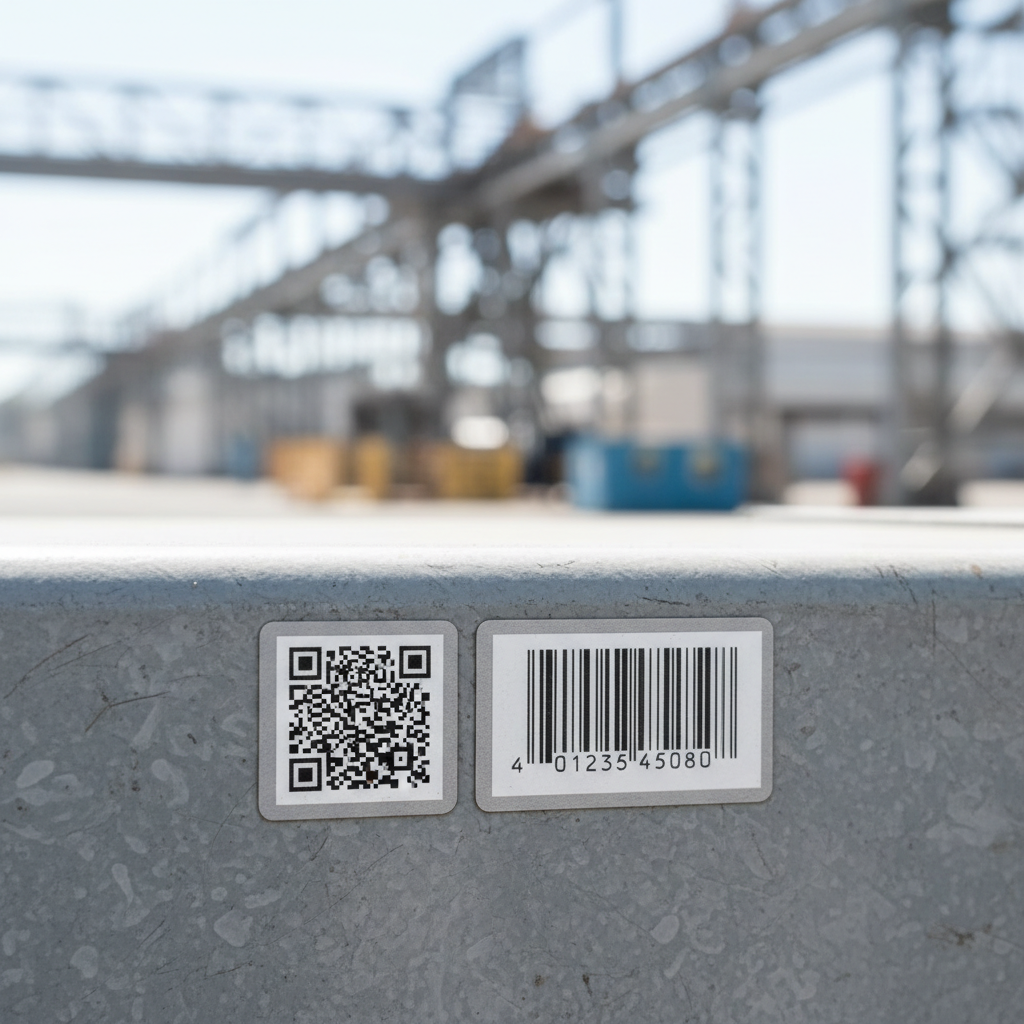
In Australian industrial environments, efficient asset tracking is non-negotiable. Whether you're managing tools, equipment, or components, getting the right label for the job is paramount. And when it comes to small assets – those compact yet critical items – the choice of barcode format can make a significant difference to your operational efficiency and long-term costs.
Two main contenders often emerge for industrial asset labelling: the classic Code 128 linear barcode and the versatile QR code. Both have their strengths, but for small labels, one often pulls ahead. Let's dive into a practical comparison to help Australian operations, facilities, and asset managers like you make the best decision.
Understanding Code 128: The Industrial Workhorse
Code 128 is a high-density linear (1D) barcode, meaning it represents data using varying widths of parallel lines and spaces. It's been an industrial stalwart for decades, widely used across various sectors for its reliability and ability to encode the full 128 ASCII character set, including numbers, letters, and special characters. This makes it suitable for encoding a broad range of alphanumeric data.
Its familiarity and established presence in warehousing and logistics mean most existing scanning equipment is compatible with Code 128. It's a robust and proven technology, often seen as the 'default' choice for many industrial applications. However, its linear nature presents challenges when label space is limited.
The Rise of QR Codes: Data in a Square
QR (Quick Response) codes are two-dimensional (2D) barcodes, instantly recognisable by their square, pixelated appearance. Developed in Japan in the mid-90s, QR codes can store significantly more data than linear barcodes in a much smaller area. This includes not just alphanumeric characters, but also URLs, contact information, and even small amounts of binary data.
A key advantage of QR codes for industrial use is their error correction capability. Even if a portion of the code is damaged or obscured, it can often still be read accurately. This resilience is a major plus in harsh industrial environments where labels are susceptible to wear and tear.
Data Density and Small Labels: Where Space Matters Most
This is where the rubber hits the road for small asset labels. Code 128, being a linear barcode, requires more physical space to encode the same amount of data as a QR code. As the data content increases, the Code 128 barcode simply gets longer. For a label that's only a few centimetres wide, a long Code 128 can become unmanageable or unreadable.
QR codes, on the other hand, encode data vertically and horizontally. This allows them to pack a large amount of information into a compact square. For small asset labels where every square millimetre counts – think small tools, components, or circuit boards – a QR code can often be printed much smaller while retaining full readability, providing a clear advantage in data density for limited spaces.
Readability and Scanning Efficiency in Industrial Settings
In a busy Australian warehouse or facility, scanning speed and accuracy are crucial. While Code 128 barcodes are generally easy to scan with linear barcode readers, they require a clear, unobstructed line of sight. If the barcode is torn, creased, or partially obscured, it can lead to misreads or no-reads, slowing down operations.
QR codes offer greater flexibility in scanning. Because they're 2D, they can be read from almost any angle, which speeds up the scanning process. Their built-in error correction is also a significant advantage; even if up to 30% of the code is damaged, it can still often be successfully scanned. This robustness is invaluable in environments where labels are exposed to dirt, grease, or minor physical damage, reducing frustrating rescans and improving workflow.
Integration with Existing Systems and Future-Proofing
Most modern asset management software and inventory systems are capable of handling both Code 128 and QR codes. However, the rise of smartphones and tablets as scanning devices has given QR codes an edge. Many operations now leverage consumer-grade devices for basic scanning, and QR codes are inherently designed for easy reading by smartphone cameras, often without needing specialised apps.
While Code 128 will remain relevant for certain applications, QR codes offer greater potential for future integration with web-based platforms, mobile apps, and enriched data lookup. Imagine scanning a QR code on a small pump and instantly accessing its full service history, maintenance schedule, and supplier details directly on a tablet, rather than just an asset ID number.
Cost and Durability of Small Industrial Labels
The cost difference between printing Code 128 and QR codes is negligible on a per-label basis; the technology used to print them is largely the same. The real cost consideration comes down to label durability and replacement frequency.
Given their superior data density and error correction, QR codes can often be printed on smaller, more robust label materials. If a small Code 128 is barely legible due to size constraints, it might be more prone to damage affecting its readability. A QR code, being more compact and resilient to minor damage, might require less frequent replacement, leading to long-term cost savings. Always choose a reputable Australian manufacturer that specialises in industrial-grade labels designed to withstand harsh conditions, regardless of the barcode type.
Key Takeaways for Your Australian Operations
- Data Density: QR codes excel, fitting more information into a smaller space – crucial for small assets.
- Readability: QR codes offer better readability from various angles and greater resilience to damage due to error correction.
- Scanning Equipment: Both are widely supported, but QR codes are more 'smartphone-friendly' for flexible scanning.
- Future-Proofing: QR codes offer greater potential for rich data integration with mobile and web platforms.
- Durability: While label material is key, QR codes' resilience to damage can lead to fewer replacements.
The Verdict: QR Codes Win for Small Asset Labels
For Australian operations, facilities, and asset managers dealing with small industrial assets, the QR code generally emerges as the superior choice. Its ability to pack more data into a tiny footprint, coupled with its robust error correction and versatile scanning capabilities, makes it ideal for environments where space is limited and conditions can be challenging.
While Code 128 remains a reliable option for larger labels or specific legacy systems, embracing QR code technology for your smaller assets can lead to enhanced efficiency, reduced scanning errors, and a more future-proof asset tracking system. When sourcing your labels, ensure you partner with an Australian industrial labelling specialist who can provide durable, high-quality labels designed for your specific barcode format and operational environment.
Need labels for your assets?
Design online and we'll print, cut and ship from Australia.
Design a label