
Labels for Extreme Cold: Surviving -40°C in Cold Chain Logistics
2 October 2026 · cold chain · industrial labels · freezer labels · asset tracking · logistics
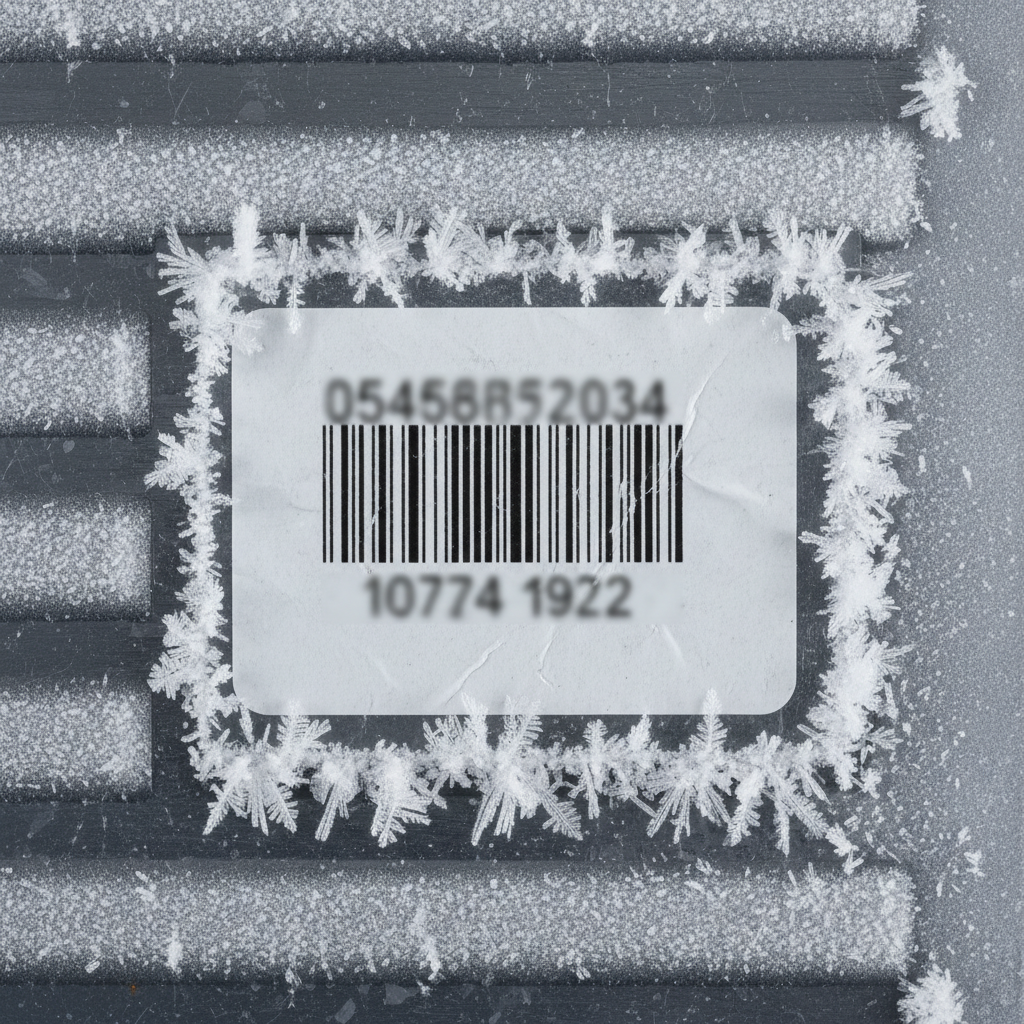
For Australian businesses involved in cold-chain logistics, keeping track of assets and inventory isn't just important; it's mission-critical. Whether you're managing pharmaceuticals, frozen foods, or specialised chemicals, maintaining product integrity relies on accurate identification, often in environments as low as -40°C. But what happens when your labels peel off, crack, or become unreadable due to the extreme cold?
Standard labels simply can't cope. The adhesive freezes, becomes brittle, and loses its grip, leading to costly errors, compliance issues, and operational bottlenecks. This article explores the science behind labels designed for extreme cold-chain environments, focusing on the specialised adhesives that ensure your asset labels survive and perform, even at a bone-chilling -40°C.
We'll delve into the challenges of labelling in sub-zero conditions and explain how choosing the right industrial label solution can significantly improve your cold chain's efficiency and reliability.
The Unique Challenges of -40°C Labelling
Imagine trying to stick a piece of tape to an ice cube. That's a simplified version of the challenge cold chain environments present for conventional labels. At temperatures like -40°C, materials behave very differently. Standard acrylic or rubber-based adhesives, which work perfectly well at room temperature, become rigid and lose their tack. This can happen instantly if applied in the cold, or over time if a labelled item moves from a warmer area into deep freeze.
Beyond the adhesive, the label's face stock (the material the information is printed on) and liner also face challenges. Many common label materials become brittle and prone to cracking at extreme low temperatures, especially if subjected to impact or flexing. The print itself can also degrade, smudging or fading due to moisture or temperature fluctuations.
Australian operations managers know that compromised labels mean compromised data. This can lead to spoiled inventory, misidentified assets, regulatory non-compliance, and significant financial losses. The solution lies in understanding the specific properties required for labels to thrive in these conditions.
Understanding Adhesives: The Heart of a Cold-Chain Label
The single most critical component of a cold-chain label is its adhesive. It needs to perform reliably in two distinct scenarios: application temperature and service temperature. Many labels are applied in ambient conditions and then moved into the cold. Others, particularly in busy freezer warehouses, might need to be applied directly onto already frozen surfaces.
For deep-freeze applications like -40°C, specialised adhesives are formulated with a lower glass transition temperature (Tg). This means they remain flexible and tacky even when standard adhesives have become hard and non-functional. These are typically aggressive, permanent acrylic adhesives or specialised rubber-based formulations designed for extreme conditions.
Key adhesive considerations include:
- High Initial Tack: The ability to stick firmly upon immediate contact, crucial for application in cold or humid environments.
- Long-Term Adhesion: Maintaining a strong bond over extended periods in fluctuating or constant low temperatures.
- Temperature Range: Clearly defined operating range for both application and service. A label might be rated for service at -40°C, but its adhesive might require application at 0°C or above. The best solutions allow for application directly at or below freezing.
Face Stock and Print Durability in Extreme Cold
While the adhesive does the heavy lifting in keeping the label attached, the face stock ensures the information remains legible. Paper-based labels are generally unsuitable for extreme cold due to their susceptibility to moisture absorption and embrittlement. They can also tear easily.
For -40°C environments, synthetic materials are the gold standard. These include:
- Polypropylene (PP): A durable, moisture-resistant plastic that offers good flexibility in cold, making it resistant to cracking.
- Polyester (PET): Even more robust than PP, polyester labels offer superior tear and abrasion resistance, making them ideal for long-term use in harsh conditions.
The print method also plays a vital role. Thermal transfer printing, utilising resin or wax/resin ribbons, produces highly durable images that resist smudging, chemicals, and extreme temperatures better than direct thermal printing. This ensures barcodes remain scannable and text stays readable, preventing errors in your inventory management system.
Direct vs. Indirect Application: Knowing Your Needs
When selecting your labels, consider where and how they'll be applied. This is a crucial distinction for cold chain efficiency:
Indirect Application (Apply Warm, Store Cold)
If your labels are applied in a relatively warm packing area (say, above 0°C) and then moved into a freezer, you have more adhesive options. The adhesive has time to 'wet out' and form a strong bond before being subjected to extreme cold. Many high-performance freezer adhesives are designed for this scenario, offering excellent long-term adhesion at -40°C once applied correctly.
However, it's still vital to use materials designed for the service temperature to prevent the label stock itself from becoming brittle and failing. Ensure surfaces are clean, dry, and free of frost before application to maximise adhesion.
Direct Application (Apply Cold, Store Cold)
This is the most challenging scenario. Imagine needing to label a pallet of frozen goods already inside a -40°C freezer. For this, you need an adhesive specifically formulated with a very low application temperature rating, sometimes as low as -25°C or even -30°C. These 'freezer-grade' or 'all-temperature' adhesives possess an aggressive initial tack that allows them to bond quickly to cold, even slightly frosty, surfaces.
For Australian businesses where products might move through various temperature zones or require re-labelling within frozen environments, direct application adhesives are non-negotiable. They prevent downtime, reduce the need to move products to warmer zones for labelling, and significantly improve operational flexibility.
Practical Tips for Maximising Label Performance at -40°C
Choosing the right label is only half the battle. Proper application and maintenance are just as critical for ensuring longevity and readability in extreme cold:
- Surface Preparation is Key: Always ensure the surface is as clean, dry, and free of frost or ice as possible. Even the best adhesive struggles with a layer of ice between it and the substrate. If applying in the cold, a quick wipe with a dry cloth can make a huge difference.
- Apply Firm Pressure: Once the label is placed, apply firm, even pressure across the entire label, especially the edges. This helps the adhesive 'wet out' and achieve maximum contact with the surface.
- Consider Substrate Type: Different materials (plastic, metal, cardboard) have different surface energies. Ensure your chosen label adhesive is compatible with the specific substrates in your cold chain. For example, some plastics have low surface energy and require even more aggressive adhesives.
- Test Before Full Rollout: Always request samples and conduct real-world testing in your specific freezer environment and on your actual assets. This is the only way to be 100% confident in your label solution.
- Printer and Ribbon Compatibility: Use a thermal transfer printer with appropriate resin or wax/resin ribbons. Ensure your printer settings are optimised for the synthetic label material to achieve a crisp, durable print.
Key Takeaways for Your Cold Chain Labelling Strategy
- Standard labels fail at -40°C due to brittle adhesives and materials.
- Specialised adhesives with low glass transition temperatures are essential for extreme cold.
- Consider both application temperature (where you stick it) and service temperature (where it lives).
- Synthetic face stocks like polypropylene or polyester are crucial for durability and moisture resistance.
- Thermal transfer printing with resin ribbons provides the most durable and scannable print.
- Always prepare surfaces thoroughly (clean, dry, frost-free) and apply firm pressure.
- Test label samples in your specific operating conditions before committing to a full order.
Conclusion: Don't Let Labels Leave Your Cold Chain Exposed
In the challenging world of Australian cold-chain logistics, reliable asset identification at -40°C isn't a luxury; it's a necessity. Investing in industrial labels with high-performance, freezer-grade adhesives and durable synthetic face stocks is critical for maintaining operational efficiency, ensuring compliance, and preventing costly errors.
By understanding the unique demands of extreme cold and partnering with an experienced label manufacturer, you can implement a labelling strategy that stands up to the harshest temperatures. Don't let peeling, cracking, or unreadable labels compromise your valuable cold chain. Choose labels designed to survive and thrive, even at -40°C, and keep your cold chain moving smoothly and accurately.
Need labels for your assets?
Design online and we'll print, cut and ship from Australia.
Design a label