Anodised Aluminium vs. Polyester: Choosing Your Industrial Asset Labels
7 October 2026 · asset labels · industrial labelling · anodised aluminium · polyester labels · asset tracking
For Australian operations, facilities, and asset managers, choosing the right industrial label isn't just about sticking a number on something. It's about ensuring critical assets are identifiable, trackable, and compliant, no matter what your demanding environments throw at them. Two of the most robust and widely used options are anodised aluminium and polyester labels. But which one is right for your specific needs?
This guide will break down the strengths and ideal applications for both materials, helping you make an informed decision that will save you time and money in the long run.
Understanding Your Environment: A Critical First Step
Before diving into the specifics of each label type, it's crucial to thoroughly assess the conditions your labels will face. Australian industrial environments vary wildly, from the scorching sun of remote mine sites to the chemical exposure in manufacturing plants, and the constant moisture in food processing facilities.
Consider factors like temperature extremes, UV exposure, chemical contact (acids, solvents, oils), abrasion, impact, cleaning procedures, and the presence of moisture or salt spray. The more detailed your understanding, the clearer your label choice will become.
Anodised Aluminium Labels: The Heavy-Duty Choice
Anodised aluminium labels are renowned for their exceptional durability and longevity. They are created through an electrochemical process that thickens the natural oxide layer on the aluminium surface, making it extremely hard and corrosion-resistant. The desired information (text, barcodes, logos) is then sealed within this anodic layer, providing unmatched protection.
This construction means anodised aluminium labels can withstand incredibly harsh conditions where other labels would fail. They are a go-to choice for permanent identification in extreme environments.
Key Benefits of Anodised Aluminium:
- Extreme Durability: Highly resistant to abrasion, impact, solvents, acids, salt spray, and high temperatures (up to 650°C).
- UV Stability: Excellent resistance to prolonged sun exposure, making them ideal for outdoor assets across Australia.
- Chemical Resistance: The sealed image is impervious to many harsh industrial chemicals, cleaning agents, and oils.
- Longevity: Designed for permanent identification, often outlasting the asset itself.
- Security: Difficult to tamper with or remove without visible damage.
Ideal Applications for Anodised Aluminium:
- Mining & Resources: Labelling heavy machinery, pipelines, safety equipment, and structural components exposed to harsh weather and rough handling.
- Oil & Gas: Identifying valves, pipes, pumps, and drilling equipment in corrosive and high-temperature environments.
- Manufacturing & Heavy Industry: Permanent identification of machinery, control panels, tools, and inventory racks where abrasion and chemicals are present.
- Marine Environments: Assets exposed to saltwater, humidity, and sun, such as boat components, dock equipment, and offshore platforms.
- Electrical & Utilities: Labelling critical infrastructure, switchgear, transformers, and outdoor electrical boxes.
Polyester Labels: Flexible Resilience
Polyester labels, particularly those made with high-performance 3M adhesives, offer a different kind of strength. They are a synthetic material known for their tensile strength, dimensional stability, and resistance to tearing. Information is typically printed onto the polyester film and then often protected with a clear laminate layer or subsurface printing to enhance durability.
While not as indestructible as anodised aluminium, polyester labels provide excellent resistance to a wide range of industrial challenges, often at a more flexible price point and with easier application.
Key Benefits of Polyester Labels:
- Good Durability: Resistant to abrasion, moisture, many chemicals, and a broad range of temperatures (typically -40°C to 150°C, depending on type).
- Flexibility: Can conform to curved surfaces and are easier to apply than rigid metal tags.
- Cost-Effective: Generally more affordable than anodised aluminium, especially for large volumes.
- Print Versatility: Can be easily custom-printed in full colour, often on-demand using thermal transfer printers.
- Adhesion: High-performance acrylic adhesives ensure strong, long-lasting attachment to a variety of substrates.
Ideal Applications for Polyester Labels:
- General Manufacturing: Labelling tools, equipment, inventory, and product identification in less extreme but still demanding indoor environments.
- Healthcare & Laboratories: Identifying medical devices, lab equipment, and pharmaceutical containers requiring chemical and sterilisation resistance.
- Electronics: Circuit board labels, component identification, and serial number tags where precision and heat resistance are needed.
- Warehouse & Logistics: Bin labels, shelf labels, and asset tags for forklifts and other handling equipment.
- Office & IT Assets: Labelling computers, servers, printers, and other valuable office equipment for asset management and tracking.
Choosing the Right Fit: Key Considerations
When making your final decision, weigh these factors carefully:
'The best label is one you only have to apply once. A false economy on labels quickly turns into a costly re-labelling project.'
Expected Lifespan
- Anodised Aluminium: If your asset needs identification for 10+ years in harsh conditions, this is your choice.
- Polyester: Excellent for assets with a 3-7 year lifespan or those requiring frequent updates that don't warrant metal.
Application Surface
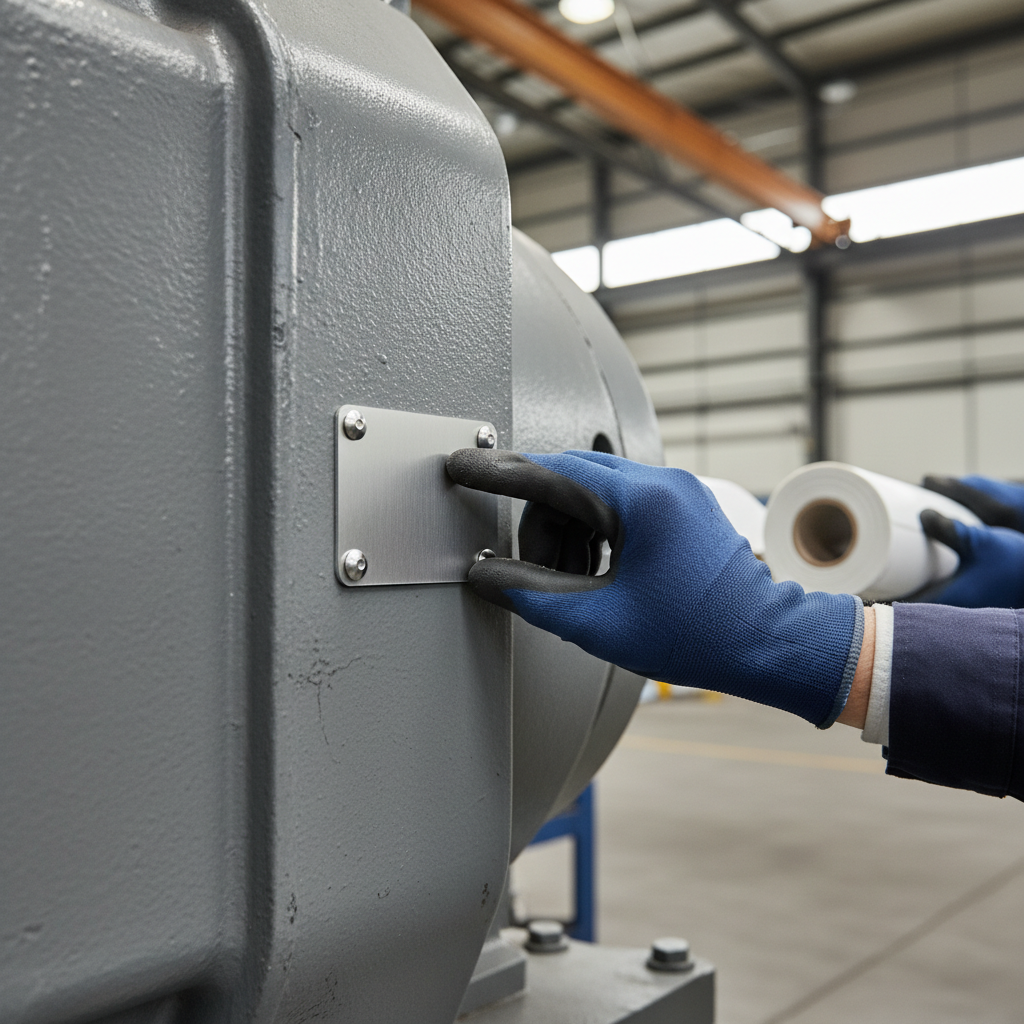
- Anodised Aluminium: Best for flat, rigid surfaces where riveting, screwing, or strong industrial adhesive can be used.
- Polyester: Ideal for flat or slightly curved surfaces. The adhesive backing makes application quick and easy.
Budget & Volume
- Anodised Aluminium: Higher initial cost per label, but offers superior longevity which can translate to lower lifetime cost for critical assets.
- Polyester: Lower per-label cost, especially for larger volumes, making them economical for extensive labelling projects.
Customisation & Printing
- Anodised Aluminium: Typically black on silver (or colour on silver) through an etching process, offering durable but less colourful options.
- Polyester: Highly versatile for full-colour printing, variable data, and custom shapes, often suitable for on-site printing.
Takeaways for Your Asset Labelling Decision
- Harsh, Permanent, Outdoor: Choose anodised aluminium for extreme temperatures, heavy abrasion, chemical exposure, or prolonged outdoor Australian sun.
- Versatile, Resilient, Indoor/Sheltered Outdoor: Opt for polyester labels where good durability, flexibility, and cost-effectiveness are priorities, or for assets with a moderate lifespan.
- Assess Your Environment: This is the single most important step. Know your temperatures, chemicals, UV exposure, and physical demands.
- Consider Application Method: Do you need riveted security or adhesive convenience?
- Think Long-Term Cost: A cheaper label that fails quickly isn't a saving. Factor in replacement costs and potential downtime.
Still Unsure? We Can Help!
Choosing the right industrial label is a significant decision for any Australian operation. It impacts efficiency, compliance, and asset visibility. While anodised aluminium offers unmatched resilience for the harshest conditions, polyester labels provide a flexible, durable, and cost-effective solution for a wide range of industrial applications.
Don't leave your asset identification to chance. If you're weighing up these options or have unique environmental challenges, our team of experts can help. We understand the specific demands of Australian industry and can recommend the optimal labelling solution to ensure your assets are always clearly and reliably identified.
Need labels for your assets?
Design online and we'll print, cut and ship from Australia.
Design a label