Aluminium vs. Polyester Asset Labels: Your Aussie Guide
3 September 2026 · asset labels · industrial labelling · anodised aluminium · polyester labels · australian industry
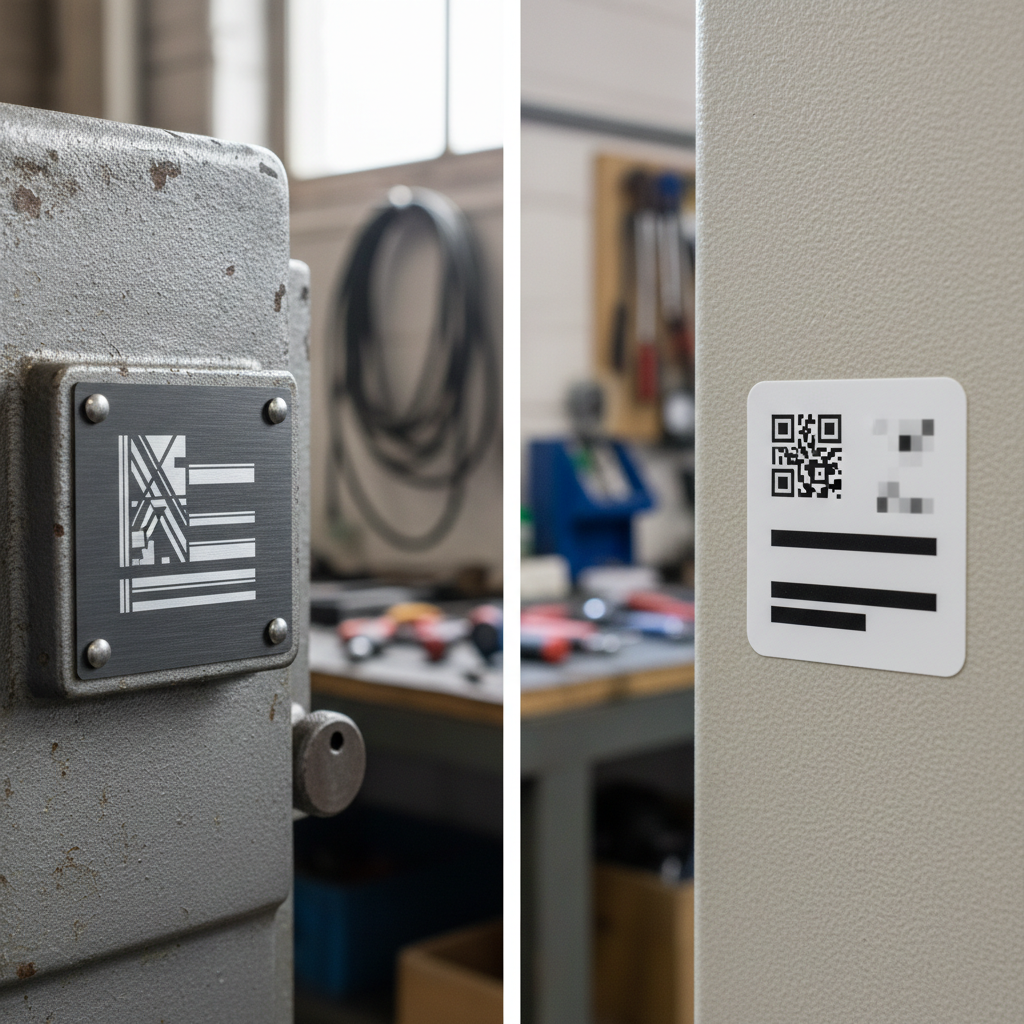
For operations, facilities, and asset managers across Australian industries, choosing the right asset label isn't just about sticking something on an item; it's about ensuring compliance, tracking efficiency, and protecting your investments for the long haul. The decision between different label materials can significantly impact how well your assets are managed.
Two prominent contenders in the industrial labelling arena are anodised aluminium and heavy-duty polyester. Both offer robust solutions, but their strengths lie in different applications and environments. Understanding these differences is key to making an informed choice that optimises your operations and stands up to Australia's unique conditions.
This guide will break down the characteristics of each material, helping you identify which label is the best fit for your specific operational needs, environmental challenges, and budget. Let's dive into the practical considerations that will safeguard your assets and streamline your management processes.
Understanding Anodised Aluminium Labels
Anodised aluminium labels are renowned for their exceptional durability and longevity. The anodisation process creates a hard, corrosion-resistant surface on the aluminium, which is then sealed. During this process, the text, barcodes, or serial numbers are typically etched or embedded into the anodised layer, making them incredibly resistant to abrasion, chemicals, and extreme temperatures.
This unique construction means that the critical identification information isn't just printed on the surface; it's part of the label's structure. For Australian industries operating in harsh environments – think mining, heavy manufacturing, or outdoor utilities exposed to intense sun and varying temperatures – this inherent resistance is a major advantage.
Beyond durability, anodised aluminium labels offer excellent readability over time. They don't yellow, crack, or fade under UV exposure, making them ideal for assets that need to be clearly identifiable for decades. They can be attached using industrial-strength adhesives, rivets, or screws, providing a permanent solution for critical equipment and infrastructure.
The Practicalities of Polyester Labels
Polyester labels, especially those designed for industrial use, are a powerhouse in their own right, offering a fantastic balance of durability, flexibility, and cost-effectiveness. Made from synthetic plastic films, these labels are engineered to withstand significant wear and tear, often featuring strong acrylic adhesives that bond permanently to a wide range of surfaces.
Modern industrial polyester labels are far more robust than standard office labels. They are typically scratch-resistant, water-resistant, and can endure exposure to many common industrial solvents and cleaning agents. While they may not match aluminium's extreme temperature or abrasion resistance, they perform exceptionally well in many challenging environments, including laboratories, food processing, and general manufacturing.
A key advantage of polyester is its versatility. It can be easily printed with high-resolution graphics, barcodes, and variable data, allowing for customisation on demand. They are also flexible, making them suitable for curved surfaces or items where a rigid label might not be practical. This adaptability, combined with their strong adhesion and resistance to environmental factors, makes them a go-to choice for a vast array of asset tracking applications.
Durability Showdown: Which Label Lasts Longer?
Resistance to Abrasion and Impact
When it comes to resisting physical abuse, anodised aluminium generally takes the lead. Its hard, metallic surface and embedded data make it incredibly resilient against scratches, scrapes, and minor impacts. If your assets are frequently handled, moved, or exposed to environments where they might be rubbed or bumped, aluminium offers superior protection against information loss.
Polyester labels, while durable, are more susceptible to deep scratches or cuts that could compromise the printed information, especially if they are heavily abraded. However, high-quality industrial polyester labels feature top coatings designed to enhance their scratch resistance significantly, often making them suitable for most non-extreme handling situations.
Chemical and Temperature Exposure
Anodised aluminium labels excel in environments with extreme temperatures or harsh chemical exposure. They can withstand temperatures ranging from well below freezing to hundreds of degrees Celsius without degradation. Their inert surface also makes them resistant to most acids, alkalis, and solvents, maintaining legibility even after chemical spills or regular cleaning with aggressive agents.
Industrial polyester labels are also highly resistant to many chemicals and a wide range of temperatures, typically performing well in temperatures up to 150-200°C. They are ideal for areas exposed to oils, greases, and common cleaning solutions. However, for extremely aggressive chemicals or continuous exposure to very high temperatures (e.g., above 200°C), aluminium will generally offer better long-term integrity.
UV and Weathering Performance
Australia's intense UV radiation is a significant factor in outdoor applications. Anodised aluminium labels are virtually impervious to UV degradation; their embedded data ensures no fading, cracking, or discolouration, even after years in direct sunlight. This makes them perfect for outdoor assets, infrastructure, and equipment that spend their entire lifecycle exposed to the elements.
While standard polyester labels can degrade over time in direct sunlight, industrial-grade polyester labels are often engineered with UV-stabilised materials and coatings. These provide excellent outdoor longevity, often rated for 5-10 years or more, making them suitable for many outdoor applications where extreme perpetual sun exposure isn't the primary concern, or where the label might be partially shaded.
Cost-Benefit Analysis and Application Suitability
Initial Investment vs. Lifecycle Cost
Generally, anodised aluminium labels have a higher upfront cost per label compared to industrial polyester. This is due to the materials and the more involved manufacturing process. However, when considering the lifecycle cost, aluminium's extreme durability and longevity mean they rarely need replacing, reducing labour and re-labelling expenses over decades. For critical, long-life assets, the initial investment often pays off handsomely.
Polyester labels offer a more cost-effective entry point, making them ideal for large-scale asset tagging projects where budgets are tighter or for assets with a shorter anticipated lifespan (e.g., 5-10 years). Their ease of customisation and printability also allows for more flexible ordering and application, which can further reduce overall costs, especially when needing to print variable data in-house.
Optimal Applications for Each Material
Anodised Aluminium Labels are Best For:
- Extreme Environments: Mining equipment, oil & gas installations, heavy machinery, outdoor utilities (poles, transformers).
- Long-Life Assets: Infrastructure, buildings, critical plant equipment expected to last 20+ years.
- High Abrasion/Impact Risk: Assets subjected to frequent physical handling, cleaning with abrasive methods, or potential impacts.
- Regulatory Compliance: Where permanent, unalterable identification is a strict requirement for safety or compliance (e.g., serial plates, warning labels).
- High-Value Assets: Where failure to identify an asset has significant financial or operational repercussions.
Industrial Polyester Labels are Best For:
- General Manufacturing: Production line assets, tools, inventory, electrical components.
- Laboratories & Healthcare: Equipment, instruments, calibration labels where chemical resistance is needed but extreme heat/abrasion is less common.
- Office & IT Assets: Computers, servers, furniture, and general office equipment.
- Warehouse & Logistics: Shelving, bins, reusable transport items.
- Assets with Shorter Lifespans: Where the label needs to last 5-10 years, aligning with the asset's typical operational life.
- Curved or Uneven Surfaces: Their flexibility allows for better adhesion than rigid aluminium.
Key Takeaways for Australian Managers
Choosing the right asset label is a strategic decision that directly impacts operational efficiency, compliance, and asset longevity. Consider your specific environment, the expected lifespan of your assets, and the level of abuse the labels will endure.
- Anodised Aluminium: The ultimate choice for extreme durability, harsh conditions, very long asset lifespans, and permanent, unalterable identification. Higher upfront cost, virtually indestructible data.
- Industrial Polyester: A versatile, cost-effective solution for a wide range of industrial and commercial applications. Offers excellent resistance to chemicals, moisture, and moderate abrasion, with good outdoor life. More flexible and easier to customise.
- Environment Matters: Australia's unique climate (intense UV, heat, dust) heavily influences label performance. Always select labels tested and proven for these conditions.
- Adhesion is Critical: Regardless of material, the adhesive quality is paramount. Ensure labels use industrial-grade adhesives suitable for the application surface and environment.
- Compliance and Readability: The primary goal is always clear, legible identification that remains intact for the asset's entire lifecycle. This supports maintenance, audits, and safety protocols.
Conclusion
Making an informed decision between anodised aluminium and industrial polyester asset labels involves weighing their respective strengths against your specific operational needs and environmental challenges. Both are excellent choices, but they excel in different arenas.
For assets exposed to the most extreme conditions, where absolute permanence and resistance to physical and chemical abuse are paramount, anodised aluminium stands out. For a highly versatile, cost-effective, and durable solution that performs exceptionally well in a broad range of industrial and commercial settings, heavy-duty polyester is an outstanding choice.
Ultimately, investing in the correct labelling solution for your Australian operations means more reliable asset tracking, reduced downtime, enhanced safety, and improved compliance. Carefully assess your assets, their environment, and your budget to select the label that will serve you best for years to come.
Need labels for your assets?
Design online and we'll print, cut and ship from Australia.
Design a label